FAMILIES & SOCIAL POLICY
We often think of our families as being separate and apart from the community, county and nation that we live in. However, this is not true. As a unit, the family is also influenced by the following:
- Influence from the government through laws and social policies.
- Laws and social policies depend on who is in political power.
- Because social policies depend upon who is in power, they are open to change.
So…What is Social Policy?
Social policy refers to how the state (our government under good old Teresa May) plans and carries out actions that relate to health and social services, the welfare benefits system, schools and other public bodies.
Policies are based on laws these laws give the government a structure within which they should operate.
For example, laws lay down who is entitled to each specific welfare benefit.
Most social policies affect families in some way or other. There are some laws and policies that are aimed directly at families. These include laws governing marriage and divorce, abortion and contraception, child protection, adoption and so on.Other policies, although not necessarily aimed directly at families, still have an effect on them. For example:
- The policy of ‘compulsory education’ enables parents to go out to work while schools provide a free ‘childminding’ service.
- The policy of ‘care in the community’ often means that it is family members rather than hospitals or nursing homes who have to care for the sick or elderly.
- ‘Taxation policies’ affect how much money is taken from families and how much is made available to pay for the services provided for families.
Comparing Family Policies Across the World~
A Comparative View
How a government acts, and the policies that it creates can have huge effects on the ‘institution’ of the family.
Let’s have a look at how different societies and different periods in history can show us some of the more ‘extreme’ ways in which a state can change and affect family life. By looking at examples from other countries we can understand how a government can affect our ‘private’ lives.
CHINA: THE ONE CHILD POLICY:

China’s one-child policy In China, the government’s population control policy has aimed to discourage couples from having more than one child.
Activity 1(AO1: K&U)
In this box below write down the ways in which the policy was ‘supervised’? (Page 235 Textbook or Internet search)
Those couples who did as they were told received extra benefits: These included:
- Free child healthcare,
- higher tax allowances.
- An only child will also get priority in education and housing later in life.
Couples who went against the ‘agreement’ to have only one child had to:
- Repay the allowances,
- pay a fine.
- Women faced additional pressure to be sterilised after their first child.
Communist Romania

The former communist government of Romania in the 1980s introduced a series of policies to try to drive up the birth rate, which had been falling as living standards declined.The communist government of Romania:
The communist government of Romania:
- Restricted contraception and abortion
- Set up infertility treatment centres,
- Made divorce more difficult.
- The legal age of marriage was lowered to 15!
- Unmarried adults and childless couples pay an extra 5% income tax.
Nazi family policy
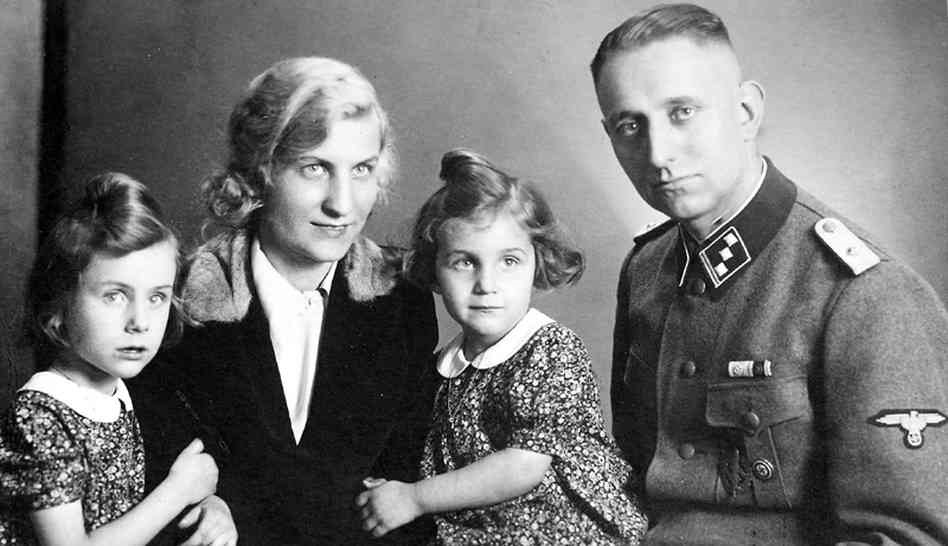
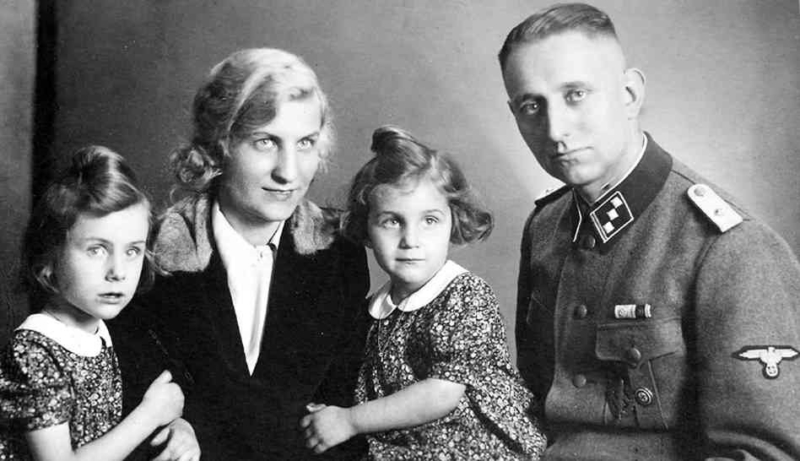
In Nazi Germany in the 1930s, the state had a twofold policy.
ONE
- Firstly, it encouraged the healthy and supposedly ‘racially pure’ to breed a ‘master race’. The people that were ‘pure’, were not allowed to access contraception and abortion.
- Women were kept out of the workforce. The lives of women in Nazi Germany had to revolve around, ‘children, kitchen and church’.
TWO
- The state compulsorily sterilised 375,000 disabled people.
- These disabled people were deemed unfit to breed These unfit people had various disabilities from, ‘physical malformation, mental retardation, epilepsy, imbecility, deafness to blindness’.
- These ‘differently abled’ people were later murdered in Nazi concentration camps.
Democratic societies
These examples seem very extreme. It has been argued by some that Britain is a ‘democratic’ society. In our ‘democratic’ country, the government does not get involved in the private sphere of the family. The only time that the government may step into family life is when there are instances of child abuse or maybe domestic violence.
Despite this, sociologists do argue that in democratic societies, the state’s social policies still have a very important role to play in shaping family life and the ‘private’ sphere’.
It is in this topic of social policies that we will look at the way in which the United Kingdom has played in the shaping of Family Life.
SOCIOLOGICAL THEORY: (Perspectives on families and social policy)
Functionalism
Functionalists:

- Society = harmony and consensus (shared values).
- Government = acts in the interests of all of the society. Social policies are the for the good of all.
- Social policies help families to perform their functions better. Social policies make life better for family members.
Ronald Fletcher (1966) Health, education and housing policies after the industrial revolution has gradually led to the development of a welfare state that supports the family in performing its functions more effectively.
For example The National Health Service means that with the help of doctors, nurses, hospitals and medicines, the family today is better able to take care of its members when they are sick.
Activity
Go back to your notes on functionalism and the family. In this box below write out what else R. Fletcher said about the family?
- Identify two functions that families perform for their members apart from healthcare.
- Suggest ways in which welfare policies may help families to carry out each of these two functions more effectively.
AO2 EVALUATION: Criticisms of the Functionalist View of Social Policies:
- Feminists argue that not all members of the family benefit equally from social policies. Policies only benefit men.
- Marxists argue against the ‘march of progress view’ that social policies are making life better and better. (March of Progress means that society is advancing in many ways) Policies are able to counter any progress that is made. One example of progress being halted is cutting welfare benefits to poor families.
Donzelot: Policing the Family
Jacques Donzelot (1977) holds a very different view to functionalists. Remember that functionalists have a consensus view of the family. They see social policies as benefitting the family.
- Donzelot has a conflict view of society and he sees policy as a form of state power and control over families.
Donzelot uses Michel Foucault’s (1976) concept of surveillance (observing and monitoring).
Michel Foucault (1976)
- We are all subject to continuous ‘surveillance by the state.
- Foucault says that ‘power’ relationships are everywhere. Not just implemented by the state. (p.236)
- Foucault sees professionals such as doctors and social workers as exercising power over their clients (expert knowledge).
How Donzelot applies Foucault to the family:
- We are subjected to ‘Police like’ control over the family: Social workers, health visitors and doctors use their knowledge to control and change families. Donzelot calls this ‘the policing of families’.
- You are more likely to be ‘watched’ (under survelliance) if you are from a low social class. Poor families seen as ‘problem’.
- Poor families are seen as the cause of crime and anti-social behaviour. These are the families that professionals target for ‘improvement’.
Donzelot – there has been no progress. There is only state control.
Donzelot focusses on the micro level of how the ‘caring professions’ act as agents of social control through their surveillance of families, Donzelot shows the importance of professional knowledge as a form of power and control.
Extension Activity Question: How are ‘professionals’ part of the ‘Ideological State Apparatus’ (Althusser). How can we relate what Donzelot is saying to the Marxist argument? What is similar?
EVALUATION AO2: CRITICISMS OF DONZELOT
Marxists and feminists say Donzelot fails to identify clearly who benefits from such policies of surveillance.
Marxists argue that social policies generally operate in the interests of the capitalist class.
Feminists argue that men benefit most from all this surveillance.
The New Right Beliefs on the Family

Conventional or ‘traditional’ nuclear family based on a married,
- heterosexual couple.
- The division of labour must be largely based on stereotypical breadwinner/ homemaking roles.
- Conventional family is the best for the successful socialisation of children.
Greater family diversity, such as increases in divorce, cohabitation, same- sex partnerships and lone parenthood cause social problems such as crime and welfare dependency.
 Nontraditional families cause crime and social problems. New Right believe that the state policies has undermined the nuclear family.
Brenda Almond (2006) argues that:
- Divorce is easier.
- The introduction of civil partnerships (and since 2014 marriage) for gay and lesbian couples shows the state does not value heterosexual relationships over gay ones.
- Tax laws discriminate against conventional families with a sole (usually male) breadwinner. They cannot transfer the non-working partner’s (usually the wife’s) tax allowances to the working partner, so they tend to pay more tax than dual-earner couples, each of whom has a tax allowance.
- Unmarried cohabitants have many more rights. For example, a succession to council house tenancies: This is covered under the Housing Act 1985. Under this act “you can inherit an assured tenancy if the tenant who died was your husband, wife, civil partner or cohabitee […].
- Adoption Rights. Being gay or single does not preclude you from adopting.
- Pension rights can also be transferred to an unmarried partner.
This illustrates that the state does not see marriage as special or better.
Lone parents, welfare policy and the dependency culture
New Right advocate Charles Murray (1984; 1990)
- ‘generous’ welfare benefits, such as council housing for unmarried teenage mothers and cash payments to support lone-parent families, undermines the conventional nuclear family and encourages deviant and dysfunctional family types that harm society.
Murray argues that these welfare benefits offer ‘perverse incentives’ - that is, they reward irresponsible or anti-social behaviour.
Activity: Go to page 237 of the text book and write out what these perverse incentives are:
Current policies are encouraging a dependency culture, where individuals come to depend on the state to support them and their children rather than being self-reliant. This threatens two essential functions that the family fulfils for society:
- the successful socialisation of the young
- the maintenance of the work ethic among men.
The New Right’s Solution
- Policy must be changed
- cuts in welfare spending
- tighter restrictions on who is eligible for benefits.
Activity: According to the New Right what benefits would there be if these ideas were to be implemented? List a few here. Use the textbook (p.237) to help you.
The New Right also advocate policies to support the traditional nuclear family, such as taxes that favour married rather than cohabiting couples, and making absent fathers financially responsible for their children.
Whereas functionalists take the view that state welfare policies can benefit the family and make it better able to meet its members’ needs, the New Right disagree.
In their view, the less the state ‘interferes’ in families, the better family life will be. Greater self-reliance, and not reliance on the state, is what will enable the family to meet its members’ needs most effectively.
Evaluation of the New Right view: AO2
Activity: The New Right view of policy has been criticised on several counts, list them all here:
The New Right’s influence on policies
The New Right is a conservative view of the family that first developed in the 1970s. Therefore, we might expect it to have had a strong influence on the Conservative Party’s policies towards the family. However, Conservative policies since the 1970s show a more mixed picture.
We can also see some similarities between New Right ideas and New Labour policies.
Activity: Using 3 separately coloured sheets, cover these time periods and make notes on what each of these successive governments did.
Conservative governments 1979-97 (p.238) Blue
New Labour governments 1997-2010 (p.238) Yellow
The Coalition government 2010-15 (p.238) Green
Feminism

Feminists = conflict view.
Society = patriarchal (male-dominated)
Men benefit, women suffer.
All social institutions, including the state and its policies, help to maintain women’s subordinate (inferior) position and the unequal gender division of labour in the family.
Policy as self-fulfilling prophecy
Hilary Land (1978) (Feminist) argues that many social policies assume that the ideal family is the patriarchal nuclear family with a male provider and female homemaker plus their dependent children.
“Normal” family life: depends on what the policy is. Policy creates a self fulfilling prophecy. This means that whatever is perceived to be the normal - the people ‘make’ normal. They live up to the expectations that the stare places on them.
e.g: State thinks normal Family: Marriage x children…they then start to offer tax incentives to married couples that are not available to cohabiting couples. This may mean more people decide to marry rather that cohabit.
So policymakers control the ‘state’ by making it very difficult for people to live in the way that opposes the governmental ideal of the ideal family.
Policies Supporting the Patriarchal Family:
- Tax and benefits policies may assume that husbands are the main wage-earners and that wives are their financial dependents.
This can make it impossible for wives to claim social security benefits in their own right, since it is expected that their husbands will provide. This then reinforces women’s dependence on their husbands.
- Childcare While the government pays for some childcare for pre-school children, this is not enough to permit parents to work full-time unless they can meet the additional costs themselves. Likewise, policies governing school timetables and holidays make it hard for parents (usually the mothers) to work full-time unless they can afford extra childcare.
This means that women are restricted from working and placed in a position of economic dependence on their partners.
- Care for the sick and elderly Government policies often assume that the family will provide this care. In general, this means it is middle-aged women who are expected to do the caring. In turn, this often prevents them from working full-time, increasing their economic dependence on their partners.
 Diana Leonard (1978) some policies may look like they support women when actually they don’t:
For example Maternity Leave: although maternity leave policies benefit women, they also reinforce patriarchy in the family. Maternity leave entitlement is much more generous than that for paternity leave and this encourages the assumption that the care of infants is the responsibility of mothers rather than fathers. Maternity benefits are also low, thereby increasing mothers’ economic dependence on their partners.
- Child benefit is normally paid to the mother. Although this gives her a source of income that d
 oes not depend on the father, it also assumes that the child’s welfare is primarily her responsibility.
Evaluation of the Feminist View:
It’s not all bad!!!
- Equal Pay and Sex discrimination laws,
- the right of lesbians to marry,
- benefits for lone parents,
- refuges for women escaping domestic violence
- equal rights to divorce
- rape within marriage was made a criminal offence in 1991.
All the above could all be said to challenge the patriarchal family. These policies can all be said to improve the position of women in the family and wider society.
Gender Regimes
POLICIES IN DIFFERENT COUNTRIES.
Eileen Drew (1995) uses the concept of ‘gender regimes’ to describe how social policies in different countries can either encourage or discourage gender equality in the family and at work.
She identifies two types of gender regime following different types of family policies:
- Familistic gender regimes, where policies are based on a traditional gender division between male breadwinner and female housewife and carer.
 In Greece, for example, there is little state welfare or publicly funded childcare. Women have to rely heavily on support from their extended kin and there is a traditional division of labour.
Individualistic gender regimes, where policies are based on the belief that husbands and wives should be treated the same. Wives are not assumed to be financially dep endent on their husbands, so each partner has a separate entitlement to state benefits.
In Sweden, policies treat husbands and wives as equally responsible both for breadwinning and domestic tasks. Equal opportunities policies, state provision of childcare, parental leave and good quality welfare services mean that women are less dependent on their husbands and have more opportunities to work.
State Versus Market
Drew argues that most European Union countries are now moving towards more individualistic gender regimes. This is likely to bring a move away from the traditional patriarchal family and towards greater gender equality in family roles and relationships.
Activity: Go to page 240. What are the potential pitfalls of individualistic gender regimes?
EXTENSION WORK:
Try the exam questions in the textbook: Page 241
Some more questions:
- Give one example of how the state may control family life.
- What is meant by ‘perverse incentives’ in relation to social policies?
- Give two examples of New Right policies introduced by governments.
- Name two New Labour policies that did not reflect a New Right view of the family.
- Why do feminists argue that family policies may create a self-fulfilling prophecy?
- Why do feminists favour an individualistic rather than a familistic gender regime?
- What is meant by neoliberal welfare policies (p.240)?