
Topic 2 Page 27 -35 of text book:
CLASS DIFFERENCES IN ACHIEVEMENTS (2) INTERNAL FACTORS
(Internal Factors include: labelling, the self-fulfilling prophecy, pupil subcultures, and how pupils’ class identities interact with the school and its values.)
(External Factors = those factors outside the education system. These include factors include cultural deprivation, material deprivation and cultural capital.)
Interactionist Perspectives:
Labelling:
- To label, someone is to attach a meaning or definition to them. E.g Teachers may label a pupil as bright or thick, troublemaker or hardworking.
Study: Howard Becker (1971):
- Carried out an important interactionist study of labelling.
- Based on interviews with 60 Chicago high school teachers, he found that they judged pupils according! to how closely they fitted an image of the ‘ideal pupil’.
- Pupils’ work, conduct and appearance were key factors influencing teachers’ judgements.
- The teachers saw children from middle-class backgrounds as the closest to the ideal, and working-class children as furthest away from it.
- They believed that working class children were badly behaved.
Study: Amelia Hempel-Jorgensen (2009)
In a working-class Aspen primary school (discipline was a major problem).
- the ideal pupil was defined as quiet, passive and obedient.
- That is, children were defined in terms of their behavior - not their ability.
A middle-class Rowan primary school had very few discipline problems:
- The ideal pupil was defined instead in terms of personality and academic ability.
- A child in this sort of school wasn’t described as a ‘non-misbehaving’ pupil - as at Aspen.
Investigating teachers’ expectations of pupils: Activity box on page 27 of your text books. Please read through and make notes on this box and answer the 2 questions at the bottom.
Labelling in Secondary School
Study: Mairead Dunne and Louise Gazeley (2008)
- ‘schools persistently produce working-class underachievement’.
- This is because of the labels and assumptions of teachers.
- From interviews in nine English state secondary schools, they found that teachers ‘normalised’ the underachievement of working-class pupils.
- Teachers seemed unconcerned by WC underachievement and felt they could do little or nothing about it.
- However, teachers believed they could overcome the underachievement of middle-class
WC Pupils MC/UC Pupils
Activity: Write out the reasons for the differences in teacher expectations. In the circles above differentiate clearly what teachers believed about pupils in each class.
Labelling in Primary Schools
Study: Ray Rist’s (1970)
- A study of an American kindergarten shows that labelling starts right from the first years of schooling.
- He found that the teachers used information about children’s home background and appearance to place them in separate groups, seating each - group at a different table.
- Those the teacher decided were fast learners, whom she labelled the ‘tigers’, tended to be middle-class and of neat and clean appearance. She seated these at the table nearest to her and showed them greatest encouragement.
- The other two groups - whom she labelled the ‘cardinals’ and the ‘clowns’ - were seated further away.
- These groups were more likely to be working-class. They were given f lower-level books to read and fewer chances to show their abilities. For example, they had to read as a group, not as individuals.
The Self-fulfilling Prophecy

A self-fulfilling prophecy is a prediction that comes true.
Interactionists argue that labelling can affect pupils’ achievement by creating a self-fulfilling prophecy.
Activity: Go to page 28 and by the picture below label the steps in creating a ‘self-fulfilling prophecy’:
Teachers’ Expectations
Study: Robert Rosenthal and Leonora Jacobson (1968)
Study of Oak community school, a California primary school, shows the self-fulfilling prophecy at work.
- They told the school that they had a new test specially designed to identify those pupils who would ‘spurt’ ahead.
- This was untrue, because the test was in fact simply a standard IQ test.
- The teachers actually believed what they had been told.
- The researchers tested all the pupils, but then picked 20% of them purely at random.
- Rosenthal & Jacobson told the school (falsely), that the test had identified these children as ‘spurters’. These ‘spurters’ were supposed to more intelligent that the rest of the children…
- On returning to the school a year later, they found that almost half (47%) of those identified as ‘spurters’ had indeed made significant progress.
- The effect was greater on younger children.
Activity: Go to page 28 read the section. What do Rosenthal and Jacobson’s study suggest with regards to labelling and the self fulfilling prophecy? On a separate page make at least 3 different points.
Effects of Streaming WC pupils:
- Streaming involves separating children into different ability groups or classes called ‘streams’.
- Studies show that the self-fulfilling prophecy is particularly likely to occur when children are streamed.
- Working-class children are more likely to find themselves put in a lower stream as we can see from the studies above.
- Difficult to move up and down streams once labelled.
- Teachers lock children in to their own expectations.
- This creates a self-fulfilling prophecy in which the pupils live up to their teachers’ low expectations by underachieving.
- Douglas found that children placed in a lower stream at age 8 had suffered a decline in their IQ score by age 11.
Effects of Streaming MC pupils:
- Middle-class pupils tend to benefit from streaming.
- They are placed in higher streams, reflecting teachers’ view of them as ideal pupils.
- They develop a more positive self-concept, gain confidence, work harder and improve their grades.
- Douglas found that children placed in a higher stream at age 8 had improved their IQ score by age 11.
Streaming Studies and the A-to-C Economy
Study: David Gillborn and Deborah Youdell (2001):
A study of two London secondary schools:
- They found i that teachers are less likely to see working-class (and black) pupils as having ability.
- These pupils are more likely to be placed in lower streams and entered for lower-tier
- This denies them the knowledge and opportunity needed to gain good grades and widens the class gap in achievement.
- G & Y link streaming to the policy of publishing exam league tables.
- These rank each school according to its exam performance - for example, in terms of the percentage of pupils gaining five or more GCSE grades A* to C.
- Schools need to achieve a good league table position if they are to attract pupils and funding.
- Gillborn and Youdell call an ‘A-to-C economy’ in schools: This is a system that means that schools only focus their time, energy & resources on pupils who ‘already’ have the ability to do well.
- Pupils getting top grades (A-C) boosts the schools league table position.
Study Continued: David Gillborn and Deborah Youdell (2001) Educational Triage:
The process above is called ‘educational triage’ by these researchers.
Triage literally means ‘sorting’.
Activity: Go to page 29 &30 of your text books. Outline on a separate piece of paper , what ‘triage’ means in the conventional sense of the word.
G & Y argue that the A-to-C economy produces educational triage. Schools categorise pupils into three types:
- Those who will pass anyway and can be left to get on with it.
- Those with potential, who will be helped to get a grade C or better.
- Hopeless cases, who are doomed to fail.
So how do teachers do this?
- Teachers do this using a stereotypical view: this is that working- class (and black) pupils lack ability.
- Because they ‘lack ability’ are likely to be labelled as ‘hopeless cases’.
- These ‘hopeless cases’ are ‘warehoused’ in the bottom sets.
- This produces a self- fulfilling prophecy and failure.
It’s ALL about this desperate need to gain a good league table positions - it is this desperation that drives educational triage.
Gillborn and Youdell: take a micro – Interactionist view. They agree with face to face small scale research…however, they agree that it is very important to look at the structures of society and how these can have a fundamental effect. So as Sociologists their research is both positivist and antipositivist.
E.g the wider education system and their ‘marketisation’ policies. This means that schools are run much like businesses (league tables & competition) – and if the education system is run like this then, inevitably this will change the way that teachers and pupils interact with each other on a day to day basis.
Pupil Subcultures
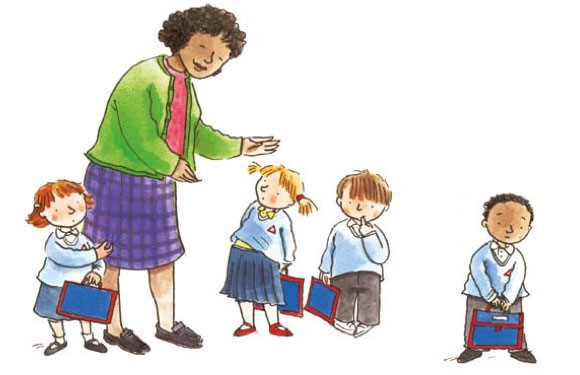
What is a Pupil Subculture?
- A pupil subculture is a group of pupils who share similar values and behaviour patterns.
- Pupil subcultures often emerge as a response to the way pupils have been labelled.
- Subcultures can arise as a reaction to streaming.
Study: Colin Lacey’s (1970)
The concepts of differentiation and polarisation explain how pupil subcultures develop:
- Differentiation:
- This is the process of teachers categorising pupils according to how they perceive their ability, attitude and/or behaviour.
- Streaming is a form of differentiation, since it categorises pupils into separate classes.
- Those that the school deems ‘more able’ are given high status by being placed in a high stream, whereas those deemed ‘less able’ and placed in low streams are given an inferior status.
- Polarisation
- Polarisation this is a process where pupils respond to streaming by moving towards one of two opposite ‘poles’ or extremes.
- In his study of Hightown boys’ grammar school, Lacey found that streaming polarised boys into a pro-school and an anti-school subculture.
- The Pro-School Subculture
- Pupils placed in high streams (who are largely middle-class) tend to remain committed to the values of the school.
- They gain their status in the approved manner, through academic success.
- Their values are those of the school: they tend to form a pro-school subculture.
- The Anti-School Subculture
- Children in low streams and bands suffer a loss of self-esteem.
- The school has undermined their self-worth by placing them in a position of inferior status.
- This label of failure pushes them to search for alternative ways of gaining status.
- Usually this involves inverting (turning upside down) the school’s values of hard work, obedience and punctuality.
Lacey says: ‘a boy who does badly academically is predisposed to criticise, reject or even sabotage the system where he can, since it places him in an inferior position’.
- Such pupils form an anti-school subculture as a means of gaining status among their peers: example by cheeking a teacher, truanting, not doing homework, smoking etc.
- Lacey says that turning towards an Anti –School Subculture actually creates MORE problems for the boys/ girls than sorts them out. See text book for more examples.
Anti- School Subculture Activity: Go to the activity box on page 31.
- Write out what problems a sociological researcher may face when conducting research on to the area of subcultures. Choose 3 points to make.
- What may be a positive thing that researchers can look forward to?
- Look at answer question 2 in the activity box. Go to page 125 to learn more about ‘group interviews’.
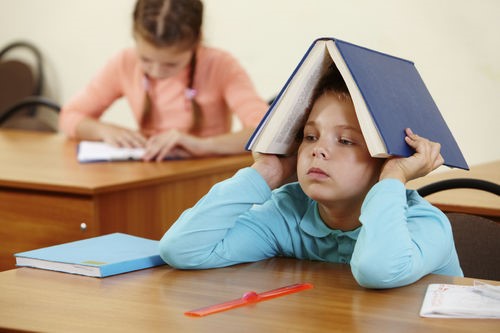
Joining an anti-school subculture = self-fulfilling prophecy of educational failure.
Study: David Hargreaves (1967)
- Similar response to labelling and streaming in a secondary modern school as Lacey.
- Boys in the lower streams were triple failures:
- they had failed their 11 + exam;
- been placed in low streams;
- labelled as ‘worthless louts’.
Solution to this was to find each other and form their own group. They have their own ‘success’ rules within suncultures. For example ‘kudos’ goes to those individuals who are brilliant at going against the school rules…
Abolishing Streaming
In this section we learn that even without banding or streaming pupils, teachers will still differentiate and label pupils. Thus continuing to result in a self fulfilling prophecy.
Study: Stephen Ball (1981)
Study of Beachside, a comprehensive in the USA.
- Beachside was in the process of abolishing banding (a type of streaming) in favour of teaching mixed-ability groups.
- Ball found that when the school abolished banding, the basis for pupils to polarise into subcultures was largely removed and the influence of the anti-school subculture declined.
- Pupil polarisation disappeared BUT differentiation continued.
- Teachers continued to categorise pupils differently and were more likely to label middle-class pupils as cooperative and able.
- This positive labelling was reflected in their better exam results, suggesting that a self-fulfilling prophecy had occurred.
- Ball’s study shows that class inequalities can continue as a result of teachers’ labelling, even without the effect of subcultures or streaming.
Since the Education Reform Act (1988),
- There has been a trend towards more streaming
- There is now a variety of types of school, some of which have a more academic curriculum than others.
- This has created new opportunities for schools and teachers to differentiate between pupils on the basis of their class, ethnicity or gender and treat them unequally.
Pupil Responses:
Study: Peter Woods (1979):
Pro- and anti-school subcultures are two possible responses to labelling and streaming. According to P. Woods there are also other responses too.
- Integration: Being the teachers pet.
- Ritualism: going through the motions and staying out of trouble
- Retreatism: daydreaming and mucking about
- Rebellion: outright rejection of everything the school stands for.
Study: John Furlong (1984)using Wood’s study above:
- Furlong says many pupils are not committed permanently to any one response (integration/ rebellion etc)
- Children may move between different types of response, acting differently in lessons with different teachers.
- The theme of pupil subcultures is an important one in several areas of education (gender and ethnicity also effect these.
Activity:
- What factors outside school might lead pupils to group together in pupil subcultures inside school?
- Write out two criticisms of labelling theory (p.32)
Pupils’ Class Identities and the School
Sociologists are also interested in how pupils’ class identities that are formed outside school interact with the school and its values to produce educational success and failure.
Study: Louise Archer et al (2010)
- There is a focus on the interaction between working-class pupils’ identities and school, and how this produces underachievement.
- To understand this relationship, Archer et al draw on Bourdieu’s (1984) concept of habitus.
Bourdieu: Habitus

- Habitus = these are habits…disposition, the way that we act.
- Habitus can be learned, taken- for-granted ways of thinking, being and acting that are shared by a particular social class.
- Habitus is about tastes and preferences about lifestyles and consumption (such as fashion and leisure pursuits),.
- Habitus refers to one’s outlook on life.
- Habitus refers to expectations about what is normal or realistic for ‘people like us’. A social class or group will share ‘habitus’.
- A group’s habitus is formed as a response to its position in the class structure.
- MC ‘habitus’ is not better than WC habitus.
- However the MC has the power to define its ‘habitus’ as superior.
- MC has the power impose it on the education system.
- This ‘power’ can lead to the school puts a higher value on middle-class tastes, preferences and so on.
This is linked to Bourdieu’s concept of cultural capital.
Schools have a middle-class habitus. This gives middle-class pupils an advantage, while working- class culture is regarded as inferior.
Symbolic Capital and Symbolic Violence: Bourdieu.
Q: Outline and Explain “Symbolic Capital” in your own words. (p.32)
Q: What exactly is “Symbolic Violence”?
Study: Archer:
- Working-class pupils felt that to be educationally successful, they would have to change how they talked and presented themselves.
- For working-class students, educational success is often experienced as a process of ‘losing yourself’.
- They felt unable to access ‘posh’, middle-class spaces such as university and professional careers, which were seen as ‘not for the likes of us’.
‘Nike’ Identities

Q: What is a NIKE identity? Explain this concept fully in your own words.
- What was policed by peer groups and what was considered ‘social suicide?’
.
- What were teacher’s opinions of this dress code?
Study: Archer
- The school’s middle-class habitus stigmatises working-class pupils’ identities.
- Seen in this light, the pupils’ performances of style are a struggle for recognition.
- The middle class see their ‘Nike’ identities as tasteless, to the young people they are a means of generating symbolic capital and self-worth.
- Nike styles also play a part in working-class pupils’ rejection of higher education, which they saw as both unrealistic and undesirable
- Higher education was regarded as unrealistic because it was not for ‘people like us’, but for richer, posher, cleverer people, and they would not fit in.
- Higher education was also seen as an unaffordable and risky investment.
- Higher education was also undesirable because it would not ‘suit’ their preferred lifestyle or habitus. For example, they did not want to live on a student loan because they would be unable to afford the street styles that gave them their identity.
- Working-class pupils’ investment in ‘Nike’ identities also expresses their positive preference for a particular lifestyle.
- As a result, working- class pupils may choose self-elimination or self-exclusion from education.
Working-class identity & those that DO Succeed:
Study: Nicola Ingram (2009)
Activity: Outline what/ who Ingram studied:
- Ingram found that working-class identity was inseparable from belonging to a working-class locality.
- The neighbourhood’s dense networks of family and friends were a key part of the boys’ habitus.
- It gave them an intense feeling of belonging. As in Archer’s study, street culture and branded sportswear were a key part of the boys’ habitus and sense of identity.
- W-class communities place great emphasis on conformity.
- The boys experienced a great pressure to ‘fit in’ and this was a particular problem for the grammar school boys, who experienced a tension between the habitus of their working-class neighbourhood and that of their middle-class school.
- Outline the case of Callum, what happened?
- Callum’s ridiculing is an example of symbolic violence, in which pupils are forced to abandon their ‘worthless’ (from the school’s point of view) working-class identity if they want to succeed.
- Study: Meg Maguire (1997) wrote of her own experience of going to grammar school, ‘the working-class cultural capital of my childhood counted for nothing in this new setting’.
Class Identity and Self-Exclusion
Study: Sarah Evans (2009)
- Studied a group of 21 working-class girls from a south London comprehensive studying for their A-levels.
- Evans found that they were reluctant to apply to elite universities such as Oxbridge.
- The few who did apply - felt a sense of hidden barriers and of not fitting in.
Study: Bourdieu (1984),
- Working-class people think of places like Oxbridge as being ‘not for the likes of us’.
- This feeling comes from their habitus, which includes beliefs about what opportunities really exist for them and whether they would ‘fit in’.
- Such thinking becomes part of their identity and leads working-class students to exclude themselves from elite universities.
Back to Study: Evans:
- The girls had a strong attachment to their locality. For example, only four of the 21 intended to move away from home to study.
- Study: Reay et al (2005) point out, self-exclusion from elite or distant universities narrows the options of many working- class pupils and limits their success.
Looking at all the above studies it shows that working- class pupils are often forced to choose between maintaining their working-class identities, or abandoning them and conforming to the middle-class habitus of education in order to succeed.
The Relationship between Internal and External Factors
Activity: Outline the relationship between Internal & External Factors in your own workds.