Childhood
Childhood as a social construction
Whilst Biologists often see childhood as a natural category, Sociologists argue that it is socially constructed. This means that the important characteristics of something such as childhood, but also health, old age or what is regarded as deviant are created and influenced by the attitudes, actions and interpretations of members of society. It only exists because people define it as such. Evidence that Sociologists draw on to support this view is that childhood varies cross-culturally, within societies and historically.
Cross-cultural differences.
In the West, childhood is a very distinct time, which is viewed as special and a time of innocence. Children are seen as different to adults – they are physically immature and not viewed as competent. They experience a long period of nurturing and socialisation. Pilcher (1995) argues that the key feature of childhood is, in fact, this separateness – children have a right to happiness.
Case Study - Ali
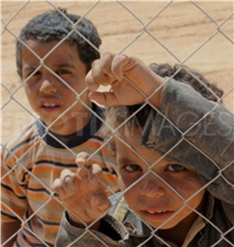
Ali lives in Souf Camp. It is one of six emergency camps built in Jordan since 1948 for Palestinian refugees. Through the years, over 1.8 million people have arrived in the camps. Every day, Ali works at a falafel restaurant. He works 8 hours a day during the school year and 12 hours a day during his summer break. Ali knows that he must work to help his family make ends meet. For Ali, working has also been dangerous—two years ago Ali nearly lost his hand when he dozed off while grinding chickpeas. Luckily, he was rushed to the hospital and his hand was saved. Ali is one of the more than 40,000 working children between 7 and 18 years old who live in Jordan. Worldwide, an estimated 246 million children are engaged in child labor. Nearly 70 percent of these children work in hazardous conditions, e.g. working in mines, working with chemicals/ pesticides in agriculture and working with dangerous machinery.
Activity: When you were a child what activities/tasks were you not allowed to take part in? Why do you think this was?
However, Wagg states that for millions of children around the world, childhood as we understand it never appeared in the first place. For example, Ennew looked at the construction of childhood cross-culturally and found that in Jamaica, children are part of the workforce, their last priority is play. She states that the preoccupations of a culture, define the way in which a child makes sense of the world. Similarly, Benedict (1934) argues that children in non-industrial societies are expected to have greater levels of responsibility at home and work, less value is placed on obedience to adults and children’s sexual behaviour is often viewed differently. Also, there is less difference in the expectations of adults and children in non-industrial societies. For example, 150 million children in developing countries are involved in child labour and it is estimated that there are 250,000 child soldiers in the world.
Extension: Research the work of UNICEF. Using http://www.unicef.org.uk/, go online and find out where UNICEF are currently working and what projects they are working on. Under the ‘Unicefs work’ tab, click on ‘Our Campaigns’ and record what campaigns UNICEF are currently engaging in
Historical differences in childhood
 The position of childhood has not however always been one of privilege in the Western world. Aries (1960) in fact argues that the modern Western idea of childhood is a relatively recent one and that in Medieval Europe, the idea of childhood did not exist. Children at this time were not viewed as having a different nature; work began from an early age. Aries (1960) argues that children were ‘mini adults’ with the same rights, duties and skills as adults. Aries (1960) used secondary sources such as the paintings and documents below, to illustrate this point.
Activity:
Aries argues childhood did not exist because…
- High infant mortality rates – indifference and neglect of children was more common,
- Low expectation of life,
- Large families - Parents were not able to form the relationships with children that they are not able to,
- Children had little or no education,
- Children started work at about the age of six and there were no laws of segregation,
- Most adults were young and often had childlike qualities,
- Children often went to work away from home.
Aries showed that the social construction of childhood was linked to industrialisation, with work moving outside of the home. Restrictions on child labour in mines and factories during the 19th Century, isolated most children from the real world. However, Aries has faced criticism for overstating the case as there were laws in medieval times that recognised children as different from adults. For example, there were laws prohibiting marriage for under 12’s.
Similarly Postman has argued that the conception of adulthood changed radically in the 15th Century with the invention of the printing press. Before the printing press, children weren’t distinguished, as community was more important than the individual. The printing press created a new definition of adulthood based on ‘reading competence’. It took time to learn the skills to read and this therefore created a difference between an adult and a child. This gave the adults the power to keep knowledge about sex, money, violence, illness, death and other “adult” matters a secret from children thus creating an “information hierarchy”.
It was from the 13th Century that childhood as we know it began to emerge. This was the result of schools specialising in the education of the young, the church seeing children as fragile creatures of God, who needed discipline yet protection from worldly evils and a growing distinction between children and adults in clothing etc., setting children apart from adults.
However, the following social changes have taken place during the 19th and 20th Centuries and have created significant changes in the position of childhood:
- Lower infant mortality rates and smaller families mean that parents have fewer children and invest greater amounts in these children with regards to money and emotions.
- Specialist knowledge about children’s health has developed. These emphasised the need of supervision and protection for younger children.
- Laws were introduced that banned child labour. From 1840s onwards, children were no longer economic assets, but liabilities who were financially dependent on parents.
- Compulsory schooling since 1880 has created a period of dependency on the family and separated children from the adult world of work.
- Child protection and welfare laws / agencies emphasised children’s vulnerability and made their welfare a central concern. The idea of children rights such as the Children’s Act (1989) sees parents as having responsibilities towards their children rather than rights.
- Laws about social behaviour e.g. minimum ages for a wide range of activities from sex to smoking, reinforce the attitude that children are different from adults.
- One of the most significant and important changes was industrialisation and this was the underlying cause for much of the above. Modern industry required an educated workforce so compulsory education is needed; higher standards of living resulting from industrialisation led to lower infant mortality rates.
The position of children has improved – The March of Progress view
Some sociologists are quick to point out how the above changes have led to the improved position of children. Those who take this stance are described as holding a ‘march of progress view’. Theorists such as Aries argue that children’s position has been steadily improving and today, it is better than it has ever been.
Families are increasingly child-centred, with children being better cared for in terms of their educational, psychological and medical needs:
- Family sizes have decreased, so individual time and attention can be devoted to children, with family activities and outings often focused on the interests of the child.
- A number of time parents spend with their children has more than doubled since the 1960s. In the 19th Century, the typical working week was between 70 and 80 hours for working class people. Today it is more like 44 hours and is tending to get shorter. This has allowed parents greater amounts of time with their children and enabled them to take an interest in their children’s activities, discussing the decision with them and treating them more as equals.
- Children are protected from harm and exploitation by laws against child abuse and child labour. There are more laws, such as the UN Convention on the Rights of the Child.

- Most babies now survive – the IMR in 1900 was 154, but this has now declined to 5.
- Higher living standards and smaller families mean that parents can afford to provide for their children’s needs. Increasing affluence with higher wages and a higher standard of living has benefitted children. Often, the children’s welfare is seen as the major family priority, frequently involving the parents in considerable financial cost and sacrifice.
- The welfare state provides a wide range of benefits to help parents care for their children.
- Paediatrics or the science of childhood developed in the 20th Century with a wide range of research and popular books suggesting how children should be brought up by parents.
- Compulsory education and more time spent in further education and training mean young people are dependent on their parents for longer.
- Children’s lives are more complex with more educational medical and leisure services.
- Growing traffic dangers and parental fears of assaults against children have meant children now travel more with parents, rather than being left to roam.

- Large businesses have encouraged a specific childhood consumer – businesses like Mothercare, Toys r us aim at the childhood consumer, and leading to a rise in ‘Pester Power’.
The position of children has not improved (The Conflict View)
Some Sociologists are quick to point out that there has not been an improvement and that the march of progress view is over generalised and idealised. For example Marxists and Feminists argue society is based on conflict between different social groups, with some having more power, status and wealth than others. They argue that the March of Progress view ignores a number of inequalities that still exists amongst children and between adults and children. Also, despite this growth in child centeredness, we need to be aware of the way children are rapidly exposed to a range of experiences that may be eroding the cultural divisions between childhood and adult status.
Inequalities remain amongst children: As outlined previously, third world children have very different life chances compared to those in the West. Similarly in Western societies inequalities remain. For example..
- Children of different nationalities are likely to experience different childhoods.
- Gender differences – Girls are expected to do more housework. Hillman (1993) found boys are allowed more freedom than girls and are expected to be independent – going out alone at night for example.
- Ethnic differences – Brannen (1994) found that Asian parents are more likely to be strict towards their daughters.
- Class inequalities - Poor children are more likely to die in infancy or do badly at school. Howard (2001) found that children who born into poor families are more likely to die in infancy or childhood, to suffer more longstanding illness, to fall behind in school and be placed on the child protection register.

Inequalities between children and adults: Adults exert their control over children in a number of ways:
- Time - bedtimes, when they eat, sleep, their daily routines and when children are allowed to grow up,
- Space - children can’t enter certain places such as shops and are told to play in certain areas. Fears over stranger danger means children are given less independence.
- Bodies – adults control what children wear, how they sit and how they walk. They also restrict how children touch their own bodies i.e. sucking their thumb.
- Access to resources – children only have limited opportunities to earn money and are economically dependent. Labour laws and compulsory education means they can’t work and adults control the pocket money they are given.
Child liberationists such as Firestone (1979) argue that extensive care and protection are just new forms of oppression e.g. being banned from paid work is not a benefit to children, but a form of inequality – subjecting them to greater adult control. Similarly, Gittins (1998) argues that there is an age patriarchy of adult domination that keeps children subordinate and dependent. This power may assert itself in the form of violence against children – over 30,000 children are on the child protection register.
However, this view assumes that all children conform, when in fact they may resist the restricted status of ‘child’ by acting older e.g. smoking, drinking alcohol. Arguably therefore, modern childhood is a status most children want to escape.
The ‘new sociology of childhood’: Smart argues that children are not merely passive victims of socialisation but are active agents who play a major part in creating their own childhoods. This new approach aims to include the views and experiences from children themselves and to see things from their perspective. For example, by using unstructured interviews and asking children about their experience of divorce, Smart found that children were actively involved in trying to make the situation better for everybody. Because it allows children to express their point of view, the new sociology of childhood also draws attention to the fact that children often lack power in relation to adults. As such, it is an approach favoured by child liberationists who campaign in favour of children’s rights.
The future of childhood
 Postman (1994) argues that childhood as we know it is now disappearing, as children become more like adults. Postman believes that media cultures fail to distinguish age groups as adults and children watch the same TV, use the same language and children are now introduced to sex younger. This means that there is a decrease in the “information hierarchy” and adult authority diminishes. Postman believes this all leads to an increase in Juvenile Offences. Children’s games are disappearing from the streets – the child is separated from the social context by being tied to the TV and computer games. Postman suggests therefore that the child is merely a passive receiver of media output.
Similarly, Palmer (2006) argues that rapid technological and cultural changes are damaging children’s development i.e. junk food, computer games, intensive marketing, increasing examinations and long hour’s worked by parents. Palmer describes this as a ‘toxic childhood’. As a result, children are deprived of a genuine childhood. As such, UK Youth are near the top end of the international league tables for obesity, self-harm etc.
Lee (2001) agrees in part that childhood is disappearing – they are getting more rights (UN Convention on the rights of a child; the 1989 Children’s Act) and their views are also taken into account in custody battles. However, Lee does conclude that rather than it simply disappearing, it has become more complex and contradictory e.g. children are important as consumers but dependent on parents for their purchasing power. Although it must be pointed out, that this discussion only really applies to Western society – as theorists such as Wagg would argue that childhood never existed in the first place in the Third World.
Zelizer argues, rather controversially, that this disappearance of childhood is a positive thing as children cost a lot to raise and they contribute little to the economy (only smiles and emotional satisfaction). With greater female employment, he sees children making a greater contribution perhaps as house children (e.g. on a Kibbutz). Similarly Firestone suggests that the disappearance of childhood is positive as the best way to raise a child is to ‘lay off’. Firestone suggests that what many see as care and protection is in fact just new forms of oppression and control. For example, protection from paid work is not a benefit to children but a form of inequality. It is a way of forcibly segregating children, making them more dependent, powerless and subject to adult control. However, Opies is quick to criticise this view, seeing children’s culture as separate from the adult world – something that is healthy as children are not exploited. Opies believes childhood is a separate culture that continues to exist in the form of games, songs, jokes etc.
 Childhood in Postmodernity: Jenks does not believe that childhood is disappearing but does believe it is changing. In a postmodern society relationships become more unstable, for example divorce becomes more common. This generates feelings of insecurity and so the relationship with the child becomes more important as a source of adults’ identity and stability- it is a constant in a life of upheaval. Whilst your marriage may end, you are still the parent of your child. As a consequence, parents become more protective and fearful for their child’s security and childhood continues to be a separate status where they are viewed as vulnerable and in need of protection.
The globalisation of western childhood: Child liberationists who see modern childhood as oppressive, argue that far from disappearing, western notions of childhood are being globalised. International humanitarian and welfare agencies have exported and imposed western norms of what childhood should be on other countries – therefore a separate life stage, based in the nuclear family and school, in which children are innocent, dependent and vulnerable, with no economic role. For example, campaigns against child labour in Third World countries reflect western views about how children ‘ought’ to be – whereas in fact, such activity by children may be the norm for the culture and important preparation for adult life.
Evaluation: Childhood is different across different cultures. Globally the experience of childhood can be very different from that of the wealthy western world with child labour, child soldiers and child prostitutes. It is therefore difficult to generalise the experience of being a child. However, it is the case that in the west children are being exposed to TV and consumerism. The degree to which this is the case and the influence that this is having is disagreed upon e.g. Opies thinks that there is still a clear distinction between adults and child’s culture.
Key terms / ideas:
- Child centred family,
- The social construction of childhood,
- Family as a unit of production/consumption,
- Protection / control / surveillance of children,
- Dependency,
- The disappearance of childhood,
- Consumerism; children as economic assets/ liabilities,
Activity
- Explain in your own words how ‘childhood is a social construction’. Give examples of this.
- Identify and explain three ways in which the position of children has improved over the last 100 years.
- Identify and explain two ways in childhood can be seen to be disappearing.
- Outline with evidence, how the ‘march of progress’ view of childhood can be criticised.
- What does Gittins mean by ‘age patriarchy’? Outline an example of this.
Complete the following table:
| Theorist | Explanation of their findings:
|
| Aries |
|
| Postman |
|
| Ennew |
|
| Howard |
|
| Hillman |
|
| Pilcher |
|
| Opies |
|
| Gittins | |
| Palmer |
Exam Questions
- Suggest three ways in which difference between childhood and adulthood may become blurred (6 marks)
- Suggest three social policies that have influenced childhood (6 marks)
- Suggest three reasons for social class differences in child rearing practices (6 marks)
- Examine the reasons for changes in the position of children in family and society (20 marks)
Extension:Using http://www.unicef.org.uk/UNICEFs-Work/Our-mission/UN-Convention/ research what the UN rights of the Child is. What five rights do children have? How many countries does this cover? What does this say about childhood? Do you think this means it is disappearing or not?